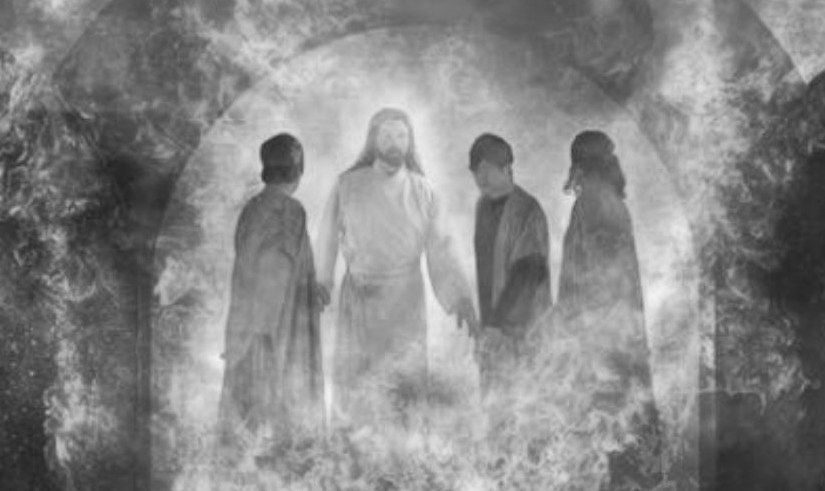
GATHER UP THE FRAGMENTS THAT REMAIN, THAT NOTHING BE LOST

Sometime ago, I was conducting an online search to purchase a particular Bible made specifically by Bearing Precious Seeds Ministry.  As I was searching, I came across an article entitled, “An Open Letter to Dr. __________ __________.” The letter was written by another preacher within the same particular group.  It concerned the “separatist” lifestyle.  The author of the letter spent a lot of time openly bashing this particular preacher (in Christian love of course) for having the audacity to share the same podium with some Southern Baptist and even Free Will Baptist.  As I read the letter, the resounding thought that kept coming to my mind was the fact that I wouldn’t be accepted in that author’s church – and neither would most of you.  Our tattoos wouldn’t be accepted; our hairstyles wouldn’t be accepted; our earrings wouldn’t be accepted. To this particular writer, most of us who do not wear a Suit and tie to church are just a bunch of drunkards, drug addicts and outcast of society.  In his eyes (and the eyes of most suit and tie religions), we are nothing more than dirty, rotten good-for-nothing sinners.  So I thank God today that Romans 5:20 says “Where sin abounds, grace does much more abound.”  Luke 19:10For the Son of man is come to seek and to save that which was lost.” John tells us in John 3:16, “For god so loved the world that He gave His only Begotten Son, that whosoever believeth in him should not perish, but have everlasting life.”  But he didn’t stop there, He goes on in verse 17, “For God sent not his son into the world to condemn the world, but that the world, through him, might be saved.” So this brings me to  John chapter 6.

In John 6, the earthly Ministry of Jesus is picking up steam.  In Chapter 4, Jesus meets the Samaritan woman at the well and heals the Nobleman’s son; in Chapter 5, Jesus heals the man by the Pool of Bethesda; He claims His rightful place within the Deity; and begins teaching both His disciples and the multitudes that had begun to gather.  Transitioning from Chapter 5 to 6, Jesus crossed over the Sea of Galilee (Tiberias). Whether He was trying to get away and have some alone time with the Father, I am not certain.  What I am certain of is that the multitudes followed Him.  So in chapter 6, Jesus is going to perform several more miracles:  In Chapter 6, Jesus feeds the large crowd with 5 Loaves of Bread and 2 fish.  Then, when His disciples were in a storm on the Sea, He walks on Water to rescue them.  I like the fact that no matter where I am in life, no matter what I am going through, no matter how bad the storm is raging, Jesus knows where I am at and anytime He wants to, He can step in a whisper “Peace be still.”  It is comforting to know that He hasn’t lost sight of me.  Jesus will then teach a greater lesson concerning the Bread, and that is HE is the Bread of Life!

But our key verse for today is Verse 12, in which John captures something the other Gospel accounts doesn’t and that is “When they were filled, he said unto his disciples, Gather up the fragments that remain, that nothing be lost.”  Why would Jesus send his disciples to gather the fragments?  I mean, after all, He had already feed the multitude, and not just feed them – BUT – filled them, completely full – they were satisfied.  Well, I think there are two possible answers:

  1. According to Jewish Custom, the Laws of Pe’ah dictates that the residue belongs to those serving. In other words, some should be kept to feed those caring for the large crowd.  In a broader sense, the general idea of Pe’ah is setting aside a portion to care for the poor in general.
  2. But I think the real lesson here is that Christ is teaching us to be Frugal. If we are to care for all things good provided by the Hand of God, how much more should we care about those fragmented lives we come in contact with? The broken pieces of a persons’ life?  I think Jesus wanted to teach us that every life matters; every whole life matters, every fragmented life matters; every broken life matters.  I am reminded of Luke 19:10For the son of man is come to seek and to save that which was lost.”

The first thing I see in this passage:

Jesus Cares About the Left-Overs

I think the message that Christ wants you and I to know is that He cares about the Fragments – the left-overs.  The shame with so many churches and even our church is, we can see a brother or sister that was an alcoholic, a drug addict, a thief, a crook – basically a dirty, rotten no good sinner, come to the alter and get their heart right with God.  “The son of man comes in and saves that which was lost,” saves them from their sin (past, prestd what do we do???  We sit in our self-righteousness and point fingers at them saying “Oh, they’ll never make it, they’re no good.  God can forgive them for their sin – but we sure won’t.”

But that’s not what Christ says, he says, “Gather up the fragments that remain, that NOTHING be lost.”  In Ezekiel 34:1-4, God rebukes his preachers saying, “And the word of the Lord came unto me, saying, Son of man, prophesy against the shepherds of Israel, prophesy, and say unto them, Thus saith the Lord God unto the shepherds; Woe be to the shepherds of Israel that do feed themselves! should not the shepherds feed the flocks?  Ye eat the fat, and ye clothe you with the wool, ye kill them that are fed: but ye feed not the flock. The diseased have ye not strengthened, neither have ye healed that which was sick, neither have ye bound up that which was broken, neither have ye brought again that which was driven away, neither have ye sought that which was lost; but with force and with cruelty have ye ruled them.”  God is talking here about self-righteousness.  He’s talking about man’s laws hindering God’s grace.  I ask you, what is the purpose of the church?  I think Psalms 147:2 and 3 gives us a pretty good idea:

The Lord doth build up Jerusalem: he gathereth together the outcasts of Isreal.  He healeth the broken in heart and bindeth up their wounds.”

I believe the church is a Hospital for the Hurting, hope for the hopeless.  I believe you and I are to go into the “highways and the hedges,” into the battle fields of our world and drag the hurting to the Great Physcian for healing.  The word of God says “He gathereth the outcasts of Isreal.”  What’s He doing? He’s “gathering up the fragments that remain, that nothing be lost.”  Every life matters.  Listen, I have enough scares from the battles in my life, I don’t need any more from “Religious” people.   So, why is He so concerned with gathering up the fragments, gathering up the Left-overs?

GOD CAN USE THE LEFT-OVERS

I’ve heard so many people talk about the regrets in their lives, how they wish they would have been saved earlier, or before they felt washed up.  The truth is, God can use what remains of your life, so don’t let your past hinder your future.  Here are just a few people in the Bible that really messed things up in their lives, yet God took the left-overs and did something great with them:

  1. Samson – Left-Over (Judges 16:28-31)
  2. David – Left-Over ((II Sam. 12:3)
  3. Peter – Left-Over (Matt. 26:69-75)
  4. Woman at the Well – Left-Over (John 4:1-41)
  5. John Mark – Left-Over (II Tim. 4:11)

“Gather up the fragments that remain, that nothing be lost” shows the abundance of God’s grace over our sin.

We’ve all made some decisions in our lives that had real, and sometimes, devastating consequences.  But, “where sin abounds, grace does much more abound.”  God’s grace is not a license for us to sin, but the abundance of that grace moves us to walk close with God.  Finish with 1 John 1:9 and Acts 27:43, 44.

When Your Tongue Fails for Thirst

Isaiah 41, beginning in verse 15  “Behold, I will make thee a new sharp threshing instrument having teeth: thou shalt thresh the mountains, and beat them small, and shalt make the hills as chaff.  16 Thou shalt fan them, and the wind shall carry them away, and the whirlwind shall scatter them: and thou shalt rejoice in the Lord, and shalt glory in the Holy One of Israel.”

Now friends – that is a wonderful promise.  God is promising here that if we will do as He tells you to do, and not do what He tells us not to do, then whenever a mountain comes up in front of us in our lives, then we will be able to grind those mountains down to chaff, and then the wind (His Holy Spirit) will come in and blow that chaff away.  Now that is just a wonderful promise from God isn’t it???  But I have to be honest with you:

  • Some days, I have trouble relating to that kind of passage:
  • Some days, I don’t feel like I beat down mountains.

Now, maybe you beat down mountains all the time.  Maybe you are on a spiritual high all the time.  Some days, I just have trouble relating to that kind of promise.  Some days, I feel more like the mountains are beating me down.

  • Have you ever been there?
  • Ever been in the place where you are doing everything you can to serve God but you feel like you’re beaten down?

Folks, I’m just saying that some days.  I just have trouble relating to this Passage:  Its’ not that I don’t believe God can surely beat down the mountains, and Hey – I’ve beat down a few mountains in my lifetime.  I’m simply saying that sometimes I feel like the mountains are beating me down more than I’m beating them down.  And the truth is, that’s where most of tend to live!

Then we get to verse 17.  Now this is where I seem to live sometimes.  Verse 17:  “When the poor and needy seek water, and there is none, and their tongue faileth for thirst, I the Lord will hear them, I the God of Israel will not forsake them.”

How discouraging it must be for someone that desperately needs water to think they’ve found water, only to discover there is none.  Think about the cowboys from the old movies.  They are out in the desert, crawling around desperately looking for water, he looks up and sees what he thinks is water.  And, with all the strength that is in him, he lifts himself up and runs the best he can to that water, diving in face first, only to get his face buried in sand – it was just a mirage!

How disappointing it must be to be dying of thirst, and think you’ve found water, only to find there is none.  Now stay with me:

It is my opinion, that every Sunday, all across our country, somebody heaves themselves out of bed on a Sunday morning, whose life is a total wreck.  They have made a mess of their lives.  They have tried everything the devil had to offer, only to find it has left them with a big, gaping hole in their souls.  All the drugs, sex, alcohol in the world couldn’t fill it.

So, they rise up on a Sunday morning, and sitting on the edge of their bed, they think to themselves, “Well, I’ve tried everything else in the world, and it ain’t working, MAYBE I will find a church this morning and see if they have anything to offer that can fill this emptiness in my soul.”

So, they find a church somewhere, and they come in unannounced and uninvited.

  • They come in looking like they did at their house; They come in smelling like they did at their house.
  • They come in and sit down – and nobody goes over and shakes their hand – cause they look different;
  • Nobody goes over and says, “I’m glad you came to our church today.  God loves you so much.”

So, they sit there and listen to the choir sing songs they don’t understand (and I’m talking about the choir – not the visitor).

They hear the preacher talk about his own personal pet peaves – how nobody loves him and everybody just bashes them on social media;

And here is this visitor, dead in his trespasses and sin, with a big ole gapping hole in his soul, desperately needing a drink of the Living Water, only to find there is none!

What a shame it is, that all across our country, people are coming to church hurting, broken and in need of water:

  • And they don’t hear one message about how to fill that gapping hole in their soul;
  • They don’t hear one message about the blessed hope;
  • About how to find forgiveness of sin.

So they leave church just as empty as when they came, and they say to themselves, “Well, I guess there was nothing to this church stuff after all.”

Let me share with you one of the greatest lessons God has taught me about prayer.  Maybe you don’t need this lesson – but maybe you do!

Sometimes, over my Christian life; sometimes over the life of my kids and my grandkids; during the lives of people I’ve known and loved – sometimes bad things happen, and I don’t understand why bad things happen to good people and good things happen to bad people.  Sometimes I can’t explain them.  ALL I KNOW IS THAT GOD IS WORKING ALL THINGS IN MY LIFE FOR MY GOOD AND HIS GLORY.

But there are times that I don’t understand why I’m going through certain things, or why people I know and love are going through certain things.  So sometimes I go to pray for these things, and for the people I love, and I get on the altar and pray, only to find I don’t know what to say.  I didn’t understand enough about what’s going on even to put it into words.

There have been times I’ve gotten down to pray for something that I’ve prayed for so many times that I don’t even know what to say anymore.

So there I am kneeling at the altar, not knowing what to say – but hear me – God doesn’t need you to explain it to Him.  When I can’t explain it myself, how in the world am I supposed to explain it to God?

So there I am praying, and I get up feeling like a failure ‘cause I didn’t know what to say.  There are people I love, people I care about that I’ve prayed so much for that I don’t even know what to say anymore.

But let me show you a wonderful promise God shared with me about prayer.  The Reality of Prayer is this:

  • You don’t have to say something to pray;
  • You don’t even have to think something to pray.

Now, let me show you how I know this:  Back to our text:  “The poor and needy seek water, and there is none, their tongue faileth for thirst.  I THE LORD WILL HEAR THEM.”

Joe, what do you mean?  When you can’t find the words, when your tongue faileth – God hears you.

Now, turn with me to Romans 8.  We are all familiar with Romans 8:28, “And we know that all things  work together for the good of them that love God, to them who are the called according to His purpose.”  However, before we get to verse 28, you’ve got to go through verses 26 and 27:

Likewise the Spirit also helpeth our infirmities: for we know not what we should pray for as we ought: but the Spirit itself maketh intercession for us with groanings which cannot be uttered.  27 And he that searcheth the hearts knoweth what is the mind of the Spirit, because he maketh intercession for the saints according to the will of God.  28 And we know that all things work together for good to them that love God

Why, because verse 27 says it is the will of God.

You know what – those times I prayed and felt like such a failure, are probably the times in my life when I prayed the most – because that is when the Holy Spirit was praying for me.

I don’t know about you, but I think I would much rather have the Holy Spirit praying for me than to have me praying for me.

“When the poor and needy seek water, and there is none, and their tongue faileth for thirst, I the Lord will hear them, I the God of Israel will not forsake them”

WHAT COULD I POSSIBLY GIVE GOD?

You will recognize with me that Psalm 51 is a Psalm of David, and it is widely believed that David wrote this Psalm after his great sin with Batheseba.

Verse 1, “Have mercy upon me, O God, according to thy lovingkindness: according unto the multitude of thy tender mercies blot out my transgressions. 2 Wash me throughly from mine iniquity, and cleanse me from my sin. 3 For I acknowledge my transgressions: and my sin is ever before me. 4 Against thee, thee only, have I sinned, (If you and I could only see tonight that when we sin, it is God’s heart that we brake, it is against Him and Him alone that we sin.  You can almost sense that David is coming before God with a broken heart over the sin he has committed against God.  And David continues . . .) and done this evil in thy sight: that thou mightest be justified when thou speakest, and be clear when thou judgest. 5 Behold, I was shapen in iniquity; and in sin did my mother conceive me. 6 Behold, thou desirest truth in the inward parts: and in the hidden part thou shalt make me to know wisdom. 7 Purge me with hyssop, and I shall be clean: wash me, and I shall be whiter than snow. 8 Make me to hear joy and gladness; that the bones which thou hast broken may rejoice. 9 Hide thy face from my sins, and blot out all mine iniquities. 10 Create in me a clean heart, O God; and renew a right spirit within me. 11 Cast me not away from thy presence; and take not thy holy spirit from me. 12 Restore unto me the joy of thy salvation; and uphold me with thy free spirit. 13 Then will I teach transgressors thy ways; and sinners shall be converted unto thee. 14 Deliver me from bloodguiltiness, O God, thou God of my salvation: and my tongue shall sing aloud of thy righteousness. 15 O Lord, open thou my lips; and my mouth shall shew forth thy praise. 16 For thou desirest not sacrifice; else would I give it: thou delightest not in burnt offering. (Now I want to draw your attention to verse 17)The sacrifices of God are a broken spirit: a broken and a contrite heart, (And what does he say?) O God, thou wilt not despise.”

Sacrifice was something that was very common in the Old Testament.  In Genesis chapter 4, Abel offered up a Lamb.  And the Bible said that God had respect unto Abel and his Sacrifice.

In Exodus chapter 12, the offering of the Passover is instituted, and God gave specific instructions on how the Lamb was to be sacrificed and his blood (hyssop) was to be sprinkled on the door post and lentils.

When Joshua lead the children of Israel across the Jordan River at Gilgal, he set up to monuments of stone, and once they were on the other side, he offered up a sacrifice.

We find in our Bibles that Job was a “Just man, who feared God and skewed evil.”  And the Bible says that Job offered a sacrifice to God every morning and evening for his children in case they had sinned.

So, in the Old Testament, Sacrifice is a very common thing.  In II Samuel chapter 24, when David had purchased the “Threshingplace of Arunah the Jebusite,” a very sacred place – David offered up a sacrifice.

We are led to believe, from reading Judges chapter 13, that when a sacrifice was offered, that when God accepted that sacrifice – they knew immediately!  The fire of Heaven would fall and consume their offering, so they knew immediately, before they ever left that altar, that God had accepted their sacrifice.

So what is it that we can Give to the Lord?  Since we do not have a lamb to offer (because Christ Himself became our “once and for all sacrifice”), what can we possibly offer God that will give us the assurance that He has accepted?   David said, “If that is what the Lord required, that is what he would give Him.”  David said, “The sacrifices of the Lord are a broken spirit and broken and a contrite heart.”

So what does that look like?  In the Old Testament, to offer the Lord a sacrifice, and to see the fire from Heaven fall and consume that sacrifice right in front of you, and to get up from that altar knowing that God has accepted what you offered and to smell the sweet savor of sacrifice.  Joy had to have flooded their souls to know that what they Offered God – and He accepted!

There is something that you and I can offer God, and folks, if you think about it, it ought to have us on shouting ground – To know that as lowly, and sinful and as ungodly as we are, to know that in this Book there is a sacrifice that we can bring to Him that He will not despise, that He will not regret – I don’t know about you, but that gives me hope!  To know that there is a sacrifice that I can offer God, that before I even finish writing this message, He’s promised that He would not refuse!

David says we can offer God a “Broken spirit and a broken and contrite heart.”  David acknowledges that he is a Sinner.  He recognizes that he has hurt the very heart of God.  So he has built and altar, and is now ready to make a sacrifice.  David says, “Create in me a clean heart, O God; and renew a right spirit within me.”  David says that if he could lay the sacrifice of a Lamb on the Altar, he would – but he says that’s not what God wants.  The “Sacrifices of God are a broken spirit – and broken and contrite heart.

So David lays  broken spirit and a broken heart on the Altar before God – because he knows that is the sacrifice that God will accept!  You see, when we think about a Broken Heart, often we think about:

  • A Broken Heart because of Trials and tribulations – and that can certainly break our hearts;
  • We think about a broken heart because of Death and suffering – and that can break our hearts;
  • We think about the unfaithfulness of a spouse, and no doubt that can break our hearts;

And sure, all these things can break our hearts – but that is not all that David is talking about here.

David says, “Lord, I want YOU to create in me a clean heart!  Lord, I want you to break open my contrite heart and see what is in there so that YOU can create in me a clean heart!”

I’m going to tell you right now, before we can get to the place that God can use us, we are going to have to get in a prayer closest somewhere and pray to God, “Lord, break open my heart, cause I don’t even know what is in there, and God once you have broken my heart – will you create in me a clean heart?”

In John chapter 12, a woman comes up behind Jesus and she has an alabaster box of ointments.  She breaks open that alabaster box and a swell smell of fragrances was smelt all over the house.  You see, if she would not have broken open that alabaster box – they would have never known what was in there.

And until we can lay our broken hearts on the altar of sacrifice – we will never know the sweet savor of sacrifice that God has accepted.

The problem we have in our society today, and in our homes today – and in our churches today is – we believe that once something has been broken – it’s no longer any good.

  • If you brake a glass – you throw it away;
  • If you brake a plate – you throw it away;

David said, “Lord, here is my broken heart – now create in me a Clean heart!”

You know, life can certainly break our hearts sometimes, but David is talking about more than that here.  David is saying, “Lord, here is my broken heart.  Lord take the bitterness out of my heart and make it sweet!”

Let me tell you something about a broken heart:

  • When a broken heart prays – it prays doesn’t it?
  • When a broken heart sings – it doesn’t sing for adoration – it sings!
  • When a broken heart preaches – it preaches doesn’t it?

And folks, I’m gonna tell you that the problem with our church and many churches across this land is that we can go through the motions; we can open our mouths and say the right words; we can sing songs and put on the show – but our hearts are closed!  We have our hearts in a box.  And how can you ever know what’s in there until you lay it on the altar and ask God to brake it open?

The other day I went to our refrigerator and I ask Kim if the bologna in there was any good.  She said “I don’t know, you’ll have to open it and smell it.”  Boy, don’t you just hate that?

That’s how our hearts are .  The Bible says our heart are deceitful and desperately wicked.  Folks, we will never know what is in there until God opens it up!

That’s what’s wrong with our church today.  There are too many people walking around with their hearts closed up. And they’re just going through the motions.

David says You have got to build and Altar, because none of us deserve to be where we are today – NONE OF US.  And once we’ve built that Altar, we’ve got to bring a sacrifice.

Here’s what I know folks:

  • I know that my heart is desperately wicked;
  • I know that I do not deserve to be here;
  • I know that I do not deserve to be a preacher or a pastor – I know that;
  • I know that if I got what I deserved, I would be bound in a devil’s hell for all eternity with no way out.

BUT, I also know that I have laid a broken heart before God and asked HIM to create in me a clean heart!

Our problem is there are too many people that will not go before God and say, “Lord, I don’t know what is in my heart.  But God, I want you to brake it open and take out what’s wrong in my heart and replace it with what’s right!”

I remember we had a neighbor when I was a little boy that used to train beagles to chase rabbit’s.  And he was good at it.  I remember one time he had this dog and I remember him saying of this dog, “I will never be able to train this dog because his spirits been broken.  Oh, he may make a good house dog or a good pet, but he will never be able to train to hunt. ”  So he gave that dog to me and my siblings – and that was the first dog we ever had.

Well, what breaks a spirit?  I’ll tell you what breaks a Spirit – When the Lord puts you in a situation where you realize you are not as strong as you thought you were:

  • When you think you’ve lived for Him long enough;
  • When you feel like you’ve read your Bible enough;
  • When you feel like you’ve prayed long and hard enough;
  • When you’ve worked and done all you felt you could do.

So here you are, you think you’re strong enough and out of nowhere – God takes you to the place where you realize you’re just not strong enough – and what does that do to you?  It Breaks your spirit!

This is the place we get when we are man enough (or woman enough):

  • To admit that we didn’t trust in prayer as much as we boasted we trusted in prayer;
  • To admit that we didn’t read our Bibles as much as we boasted about reading our Bibles enough;
  • When we admit that we didn’t live for Him as much as we boasted we lived for Him.

And you know what it does when you get to that place?  It breaks your spirit.  David said, “we need to get to the place where we have built the altar, and we have repented and ask God to create in us a new heart and renew in us the right spirit.”

David looked at his life and saw the sin in his life, and it crushed him.  He built the altar and repented before God and he laid his broken heart and spirit before God and said, “Lord – I know I ain’t no good, but will you clean my heart and renew in me the right spirit?”

There may be some reading this message that feel there is too much baggage in your past, that God can’t use or want you.  I promise you this – it you bring before God the sacrifice of a broken spirit and a broken contrite heart – GOD will accept your sacrifice – He promises it in His word.

WORTHY IS THE LAMB!

The first mention of a Lamb is given in Genesis 22:7, where Abraham takes Isaac up onto Mt. Moriah to give a sacrifice.  God was testing Abraham’s obedience and love.

Abraham and Isaac arrive on Mt. Moriah, and Isaac asked a question.  He says, “I see the altar, and I see the fire and wood, BUT, where is the Lamb?

And for the first time, the word LAMB is used in the Bible.  Abraham then makes the second statement in the Bible concerning the lamb and says, “God Himself shall provide a sacrifice.”

The third time the word LAMB is used is in Exodus 12:3, where God tells Moses, “Moses, I want you to go to all the people and tell them something for me.  Gather all the people and tell them, that on the 1st day of the first month, the Angel of Death is going to pass over the land of Egypt.  And when the Angel of Death passes over, the first born of every household will die.  So Moses, you tell the head of each household to get a LAMB, without spot or blemish, I want them to sacrifice the Lamb and take the blood of the Lamb and place it over their door post.  And when the angel of death passes over, hose that have kept my word, the Angel of Death will pass over them.”

And let me just say right here, right now, when the Angel of Death passes over our lives, it is not looking to see:

  • Whether we were good Baptist,
  • Whether we were good Methodist,
  • Whether we were good episcoplians,
  • Its not looking to see whether we lived by the Law.

He is looking to see whether or not we have applied the blood of the Lamb!

So the question comes – Why the Lamb?  Why was the Lamb chosen for Abraham and Isaac?  Why was the Lamb chosen for the Passover?

In Leviticus 14:12, at the cleansing of the leper, the Priests shall take a Lamb, and the priests shall sacrifice the lamb and sprinkle the blood on the thumb and big toe of the leper for healing.

  • Why a Lamb in the life of Abraham and Isaac?
  • Why a Lamb for the Passover?
  • Why a Lamb for the cleansing of the Leopard?

Because according to Levitical Law, Leviticus 14:24, says that the Lamb was a Trespass Offering.

The Prophet Isaiah gives us a little hint as he looks through his prophetic telescope as he sees Jesus Christ being led as a Lamb to the slaughter.

700 years later, we begin to get glimpses of this Lamb in the New Testament.  In Luke Chapter 2 and beginning in verse 7, we find that Mary truly did have a “Little Lamb whose fleece was white as snow.” The Bible says, “And she brought forth her firstborn son, and wrapped him in swaddling clothes, and laid him in a manger; because there was no room for them in the inn. 8 And there were in the same country shepherds abiding in the field, keeping watch over their flock by night. 9 And, lo, the angel of the Lord came upon them, and the glory of the Lord shone round about them: and they were sore afraid. 10 And the angel said unto them, Fear not: for, behold, I bring you good tidings of great joy, which shall be to all people (red and yellow, black and white – they are precious in His sight). 11 For unto you is born this day in the city of David a Saviour, which is Christ the Lord.

On a dusty road in Acts 8:32, the deacon Philip echoed those words as he saw Jesus Christ, “as a lamb dumb before his shearer.”

Don’t miss this now:

  • A lot of people have trusted Jesus as a King – but that will not get you to Heaven.
  • A lot of people have trusted Jesus as the Great High Priest – but that will not get you to Heaven.

In John 1:29, John the Baptist stood on the banks of the Jordan River, as a “voice crying out in the wilderness,” as he saw Jesus coming, he didn’t say:

  • Behold the King of Kings and Lord of Lords that taketh away the sin of the world.”
  • Behold the Great High Priests that taketh away the sin of the world.”

He said, “Behold the Lamb of God which taketh away the sin of the world.”

Folks you and I didn’t need a King – we needed a LAMB.  In I Peter 1:19, the Bible tells us, “Jesus was our Lamb without blemish.”

Paul says in I Corinthians 5:7, “Christ our Passover is given for us.”

  • You and I are sinners. “For all have sinned and come short of the glory of God.”
  • We have spots – we have blemish.
  • We need a sacrifice
  • We need a Lamb.

As we get to the Book of Revelation, the fulfillment of Biblical prophecy:

  • You would think we’d see Christ as King;
  • You would think we’d see Christ as the Great High Priest.

But over and over again, we find Him as the Lamb.

Why not a King?  Why not a Great High Priest?  Well, I think because as a sinner – I didn’t need a King:

  • I needed a sacrifice.
  • I needed the Blood applied.
  • I needed a Lamb without spot or blemish.

No wonder the Bible tells us, “WORHTY IS HE LAMB.

I HAVEN’T ARRIVED YET

I think if there is one word that describes the American Dream – I think that one word would be SUCCESS!

  • Everybody wants to be associated with success;
  • Everybody wants to be successful;
  • Every parent wants their children to be successful;
  • In High School, the one who did the best was usually voted the “Most Likely to Succeed.”

However, depending on who you talk to, you can get varying definitions of what SUCCESS actually means.  For example:

  • Somebody said “Success is what every person wants to buy, but nobody wants to pay for.”
  • Somebody else said, “The person that is successful in business is the person that can delegate the most, shift all the blame, and get all the credit.”
  • Another said, “The successful person can shoot-the-bull, pass-the-buck, and make 7 copies of everything.”
  • And finally, someone else said, “Success is getting your mother-in-law to go home early.”

Now I am not going to say AMEN or O ME to that one!  But I want you to realize that not only is SUCCESS hard to DEFINE, it is also hard to FIND.

I often feel like the person that said, “Just when I found the keys to success, somebody changed the lock!”

For whatever reason, I have always enjoyed biographies and autobiographies.  When I was in Bible College, one of my assignments in a Missions class was to read a book called “Through the Gates of Splendor,” written by Elisabeth Elliott about the life of her husband Jim Elliott, and four other missionaries as they took the Gospel message to the “head-hunter” in South America and actually ended-up losing their lives being viciously murdered by the very people they wanted to reach.

I enjoy reading about C.H. Spurgeon, the Prince of Preachers, and about his life and ministry.  I enjoy reading about Billy Graham and how God brought a great revival to America through his ministry.  I enjoy reading about the great Methodist preacher John Wesley, and about the Protestant Reformation.

And I like reading these types of books for several reasons:  1) They inspire me to do more.  They make me want to press on and do greater things for God.  But 2) I read them because I want to know what it was about their lives and ministries that made them so successful.  What was the Secret to their Success?

Paul tells us in Philippians 3:10-14, “10 That I may know him, and the power of his resurrection, and the fellowship of his sufferings, being made conformable unto his death; 11 If by any means I might attain unto the resurrection of the dead. 12 Not as though I had already attained, either were already perfect: but I follow after, if that I may apprehend that for which also I am apprehended of Christ Jesus. 13 Brethren, I count not myself to have apprehended: but this one thing I do, forgetting those things which are behind, and reaching forth unto those things which are before, 14 I press toward the mark for the prize of the high calling of God in Christ Jesus.”

As I think about this passage of Scripture from Philippians 3:10-14, I realize that Paul is an excellent example, and in my opinion, outside of the Lord Jesus Christ Himself, possibly the greatest preacher and missionary in all the Bible.  I think it is safe to say, Paul was a success!

I love to read the Pauline Epistles, I love to see how Paul responded to the challenges of his ministry.  And I believe the things that made him such a successful servant for Christ are the same ingredients that you and I need to apply in our lives if we want to succeed.  And perhaps one of the most simple ingredients is found in these verses.  Look at what Paul says in verses 10-12, “10 That I may know him, and the power of his resurrection, and the fellowship of his sufferings, being made conformable unto his death; 11 If by any means I might attain unto the resurrection of the dead. 12 Not as though I had already attained, either were already perfect:”  Then in verse 13 Paul says, “Brethren, I count not myself to have apprehended:”

You know what Paul is say here?  Paul is saying:

  • I know I am saved;
  • I know I am sanctified;
  • But I am not satisfied.

Paul says, “I know Him, I know the Power of His resurrection and the Fellowship of His suffering, and I know I am being conformed – BUT – I have not attained, I have not apprehended – I have not arrived!

  • Even though Paul is probably the greatest Christian that ever lived;
  • Even though Paul had a prayer life that was second to none;
  • Even though Paul was possibly one of the greatest preachers ever;

Paul says, “I have not arrived.  I am not satisfied.”  Paul, at the time of this writing, was unparalleled as a missionary, yet Paul says, “I’m still not what I ought to be.”

The one thing you will find that every successful person has in common – whether it is in ministry, or business, or school or even athletics – the one thing they all have in common is that they are not SATISFIED.  When they achieved success, they felt like they had not yet attained!

Now Paul, when you look at his life and ministry – Paul was very Satisfied with Jesus – but he was not Satisfied with his own life.

And you know what that says to me?  It says to me that I should NEVER become satisfied in my life.  Never be satisfied with where I am right now.  Paul said, “I have not attained – I have not apprehended – I have not Arrived.” And folks, WE haven’t either.

Someone once said, “I am satisfied with Jesus – but when I look at the Cross, I wonder if Jesus is satisfied with me?”

I’ve heard it said that success is not determined by what you are – but what you could be!

One of the things that made Paul a Success for God was based on the fact that he never got to the placed that he felt like he had arrived, that he had done so much for God that he didn’t need to do anymore.  Paul said, “I have not attained, I have not apprehended.” And folks, we haven’t either!

A LAND OF HILLS AND VALLEYS

Deuteronomy 11, verse 10-12 says, “10 For the land, whither thou goest in to possess it, is not as the land of Egypt, from whence ye came out, where thou sowedst thy seed, and wateredst it with thy foot, as a garden of herbs: 11 But the land, whither ye go to possess it, is a land of hills and valleys, and drinketh water of the rain of heaven: 12 A land which the Lord thy God careth for: the eyes of the Lord thy God are always upon it, from the beginning of the year even unto the end of the year.”

We understand that Moses is telling the children of Israel that they will one day pass into Canaanland, the Promised Land; the land that God had espied for them; the land flowing with milk and honey, the land that was the glory of all lands for the children of Israel.  But Moses tells them that when they get there, it will be a land with both hills and valleys.  Although Canaanland is a picture of victorious Christian living, the Bible tells us here that there are not only hilltops in Canaanland, but there are also some valleys.

In I Kings chapter 20, we are going to find a wicked King by the name of Benadad (he is the King of Syria). King Benadad comes up against another wicked King by the name of Ahab, (he is the King of Israel).  But God has chosen to give Israel the victory.

Look at verse 22, “And the prophet came to the king of Israel, and said unto him, Go, strengthen thyself, and mark, and see what thou doest: for at the return of the year the king of Syria will come up against thee.

The prophet of God in verse 22 is telling King Ahab that although he has won a great victory here, the enemy is not finished – the are going to come again. Now isn’t that the way it is in our lives? Now look at verse 23, “And the servants of the king of Syria said unto him, Their gods are gods of the hills; therefore they were stronger than we; but let us fight against them in the plain, and surely we shall be stronger than they.”

Here we find that the advisors to King Benadad tell him, “King, their God is a God of the Hilltops; He’s a God of the Mountains. But if we can get them down in the plains; if we can get them down in the lowlands – down in the valley – we can defeat them there.”

But notice with me verse 28, “And there came a man of God, and spake unto the king of Israel, and said, Thus saith the Lord, Because the Syrians have said, The Lord is God of the hills, but he is not God of the valleys, therefore will I deliver all this great multitude into thine hand, and ye shall know that I am the Lord.”

Now I believe that Satan and his crowd would like you and I to believe that our God is only a God of the Mountains, and if they can get you and I down in the lowlands, down in the valley, then they can defeat us.  Now they are right about one thing – GOD IS GOD OF THE MOUNTAINS. And I’ll tell you, I’ve had some mountaintop experiences in my life. And I love being up on top of that mountain.  I enjoy feeling the presence of God in my life.  But the truth is, mountaintop experiences do not tend to last to long.  You can go from having one of the greatest spirit experiences one day to having one of the worst the next.

But I have a consolation to share with you – the same God that is with you up on the mountaintop, is just as big a God with you in the Valley!  If you have been a Christian for any length of time, you have either been in a valley, going through a valley, or about to enter a valley. You can be assured of it.

But I want you to know that your valley experience didn’t take God by surprise and He has allowed that valley to come into your life.  If you are in the valley right now, I can I can confidently say to you:

• God knows where you are at!
• And He hasn’t lost sight of you in the valley!

Now, I used to think God was big up there on that mountaintop, but I’ve learned He’s awfully big down there in the valley as well.  So, rather than praying that God will get you out of the valley experiences of your life, maybe ask Him what you can get out of those times in your life!

From “Lion Chasers” to “Prayer Pistols”

Our church is managing to cram Matt Batterson’s 40 Day Devotional entitled “Draw the Circle” into a 40 week Small Group study.  Last nights lesson was from Chapter 26, which I have affectionately re-titled “From Lion Chasers to Prayer Pistols.

“Lion Chasers” comes from a reference by Coach Buzz Williams to his players at Marquette University.  The premise of the lesson was that our intensity for Jesus should match the intensity for all other areas of our lives.

This weeks lesson was based on a story about Frank Laubach, who in the 1930’s began a prayer experiment.  The driving motivation behind the story was based on a question that consumed every waking moment, and the question was this:  Can we have contact with God at all times?  He then set out on a quest to answer that question.

The Bible verse for this weeks lesson was from I Thessalonians 5:17, “pray without ceasing.”  However, the real emphasis was on I Timothy 2:1, “I exhort therefore, that, first of all, supplications, prayers, intercessions, and giving of thanks, be made for all men;” (KJV).  I like the way the New Living Translation puts it, “I urge you, first of all, to pray for all people. Ask God to help them; intercede on their behalf, and give thanks for them.”

One of the ways he learned to spend more time with God was by “shooting people with silent prayer.”  Every one that you and I come in contact has a story.  Their story may not be something we know – but they have a story none the less.  Some are hurting through physical ailments, some through marital problems, others through the loss of a loved one, or financial devastation.  We do not know what issues those we pass may be facing, BUT, we can pray for them to the One who does know.  The distance between us and God is simply a prayer away.

So, if you really want to learn to spend more time with God, I would challenge you today with this thought:

  • Rather than get angry at the driver that just cut you off on the way to work, shoot him/her with your prayer pistol;
  • Rather than get stressed out over issues at work, shoot your co-workers with the prayer pistol;
  • Rather than hold anger against your brother or sister in Christ, shoot them with the prayer pistol;
  • Rather than spend another second being angry at those you love, whether a spouse or a child, shoot them with the prayer pistol.

And if you are unlike the rest of us and have no one to shoot a pray at – shoot me with the prayer pistol – I need all I can get!

When You Are in the Fire

Daniel 3:16-18 says:

Shadrach, Meshach, and Abednego, answered and said to the king, O Nebuchadnezzar, we are not careful to answer thee in this matter.” 

  • We’re not afraid of this;
  • We’re not scared of this;

17 If it be so, our God whom we serve is able to deliver us from the burning fiery furnace, and he will deliver us out of thine hand, O king. 18 But if not, be it known unto thee, O king, that we will not serve thy gods, nor worship the golden image which thou hast set up.”

I love that – “BUT IF NOT . . .”  They were saying, “We want you to know something King, we’re not going to back down – we’re not going to bow down – we’re not going to do what you ordered us to do because we already know what God wants us to do!”

They had Confidence as they went to that Fiery Furnace.”  And I’m telling you today that you and I can have that same confidence when we face our Fiery Furnace, because the same God that walked with Shadrach, Meshach and Abednego is still God today!

Don’t you know it took a lot of faith for them to say, “You know what, we see that furnace over there heated 7 times hotter.  We know what you’re going to do to us if we don’t bow down.  But we’re still not going to give up on the faith we have in the God who will walk around in the Fiery Furnace with us!”

Friends, trust me when I say this, when you are walking around inside the fire, God isn’t on the outside watching – He’s in the fire walking with you!  We serve a God that is not going to abandon us when we face our trials; He’s not going to leave us alone when we face our problems in life.

  • You may be having physical problems;
  • You may have some financial problems;
  • You may have some marital problems;
  • Spiritually, you may be struggling.
  • Maybe the devil has tested you;
  • Maybe you are deep in the fire.

But child of God, you hold on, cause I’m here to tell you this morning “You’ve Got a Friend in the Fire!

They determined in their lives that even if the Sovereign God put them in the Fiery Furnace and they lost their our lives, they were still going to trust Him.  They decided to Follow Jesus – No Turning Back – No Turning Back.

  • You and I can be confident that God sees us in our lives and He is not caught by surprise;
  • You and I can be confident that God can save us from the fire in our lives if He chooses;
  • And we can be confident that if God puts us in the fire, and keeps us in the fire, then He knows what He’s doing.

Now, that is easy to preach; and it is easy to listen to and to Amen – but it’s not so easy to live!  BUT IT SHOULD BE.

Trust and Obey For there’s no other way;

To be Happy in Jesus;

But to Trust and Obey.


ARE YOU BUILDING TO LAST?

Years ago, our family had the opportunity to spend several weeks in Venice, Italy.  Venice is a city rich in both history and architecture.  We visited the Mirano Glass Factory.  We ate lunch many times in the Piazza San Marco, and watched in amazement as pigeons landed all over Jenni.  We saw magnificent feats of architecture, such as the Rialto Bridge (created by Antonio da Ponte in 1588), the Bridge of Sighs (built by Antonio Contino, nephew of Antonio da Ponte, in 1600), San Marco Basilica (originally built in the 9th Century and housed the remains John Mark, one of four disciples of Jesus Christ who were chosen to give us one of the four Gospel accounts.  Though the architect is unknown, it stands as a grand structure even today)We toured the Doges Palace and walked from the interrogation rooms there, across the Bridge of Sighs (which crosses the Rio di Palazzo), to the Prison.   It was this “crossing” that caused the Bridge of Sighs to gain its name.  While riding the gondolas, we passed the birth place of Marco Polo. These are just a few of the structures that immediately come to mind as I think about that unforgettable trip.  Yet, there were so many other things we saw that were just as old, and just as amazing that I can’t name.  And though the architects of many of these structures are unknown, these structures stand hundreds of years later as a testament of their work.

As we celebrated Mother’s Day yesterday, I thought about what our daughters and daugther-in-law were building in our grandchildren.  As a parent, I know that much of what they do behind the scenes may never be known to those on the outside.  Much of what they do will go unrecognized.  Yet, though you and I may never know their sacrifices or the work they are doing to build up those little cathedrals God has entrusted to their care – God Himself knows.

Matthew 7:24-27 (KJV) says:

24 Therefore whosoever heareth these sayings of mine, and doeth them, I will liken him unto a wise man, which built his house upon a rock: 25 And the rain descended, and the floods came, and the winds blew, and beat upon that house; and it fell not: for it was founded upon a rock. 26And every one that heareth these sayings of mine, and doeth them not, shall be likened unto a foolish man, which built his house upon the sand:  27 And the rain descended, and the floods came, and the winds blew, and beat upon that house; and it fell: and great was the fall of it.” 

My prayer for our children and grandchildren, and for your children and your grandchildren is that as we are building these young hearts and minds, that we are building them to last, to stand the test of time, to weather the storms that will come in their lives.  To do that, we have to ensure that we begin on the right foundation.  And if we do, when our lives are done, may they say of us, “. . .  Blessed are the dead which die in the Lord from henceforth: Yea, saith the Spirit, that they may rest from their labours; and their works do follow them.”

COVER ME – I’M GOING IN

Matthew 26:36-46, “36 Then cometh Jesus with them unto a place called Gethsemane, and saith unto the disciples, Sit ye here, while I go and pray yonder. 37 And he took with him Peter and the two sons of Zebedee, and began to be sorrowful and very heavy. 38 Then saith he unto them, My soul is exceeding sorrowful, even unto death: tarry ye here, and watch with me. 39 And he went a little farther, and fell on his face, and prayed, saying, O my Father, if it be possible, let this cup pass from me: nevertheless not as I will, but as thou wilt. 40 And he cometh unto the disciples, and findeth them asleep, and saith unto Peter, What, could ye not watch with me one hour? 41 Watch and pray, that ye enter not into temptation: the spirit indeed is willing, but the flesh is weak. 42 He went away again the second time, and prayed, saying, O my Father, if this cup may not pass away from me, except I drink it, thy will be done. 43 And he came and found them asleep again: for their eyes were heavy. 44 And he left them, and went away again, and prayed the third time, saying the same words. 45 Then cometh he to his disciples, and saith unto them, Sleep on now, and take your rest: behold, the hour is at hand, and the Son of man is betrayed into the hands of sinners. 46 Rise, let us be going: behold, he is at hand that doth betray me.”

There were three times, at least, in the life of the Savior where He was under a tremendous burden. In the wilderness, He won the victory over Satan. On the cross, He won the victory over sin. In the Garden of Gethsemane, He won the battle over self-will. Every time He was faced with extreme pressure, He taught us what to do. This garden experience was very different from the other two accounts. In the wilderness there is a devil you can see. At Calvary there is a cross you can see. However, in the garden there is nothing visible as the source of this battle. What a lesson for us all!

Sometimes we are feeling great stress and pressure. Often times, as I talk with people about their problems, they tell me they are really not sure what is even causing them to feel like they do. It is one thing to be under a load and it is something else not to be able to point to any one single cause. The pressure is still just as real to the person going through it even if they can’t touch it or put a name on it. The burden is still there.

As we look at these verses, the first thing I see is the grinding in the garden. The word Gethsemane means “oil press” or “olive press.” In this garden, the olives were placed onto the millstones to be crushed by the weight of the press to extract their oil. There were four different pressings of the olives. The first produced the oil used for holy things associated with the Temple. The second provided the oil for home cooking. The third pressing yielded oil for medicine. The last was used for soap, beauty aids or household applications. In short, everything in the olive had to come out under the load of the press. Olive oil may only cost us a few dollars but it cost an olive everything that was is in it!

We see the pressure upon the Savior in His sweating. Luke records the account and says, “his sweat was as it were great drops of blood falling to the ground” (Luke 22:44). What a strange place to bleed. In a beautiful garden the crimson color is no longer seen on the flowers but it now covers the ground. How awful that sight must have been to those who were with Jesus! It teaches us that sometimes we can have an ugly problem in a beautiful place. You go through life and just achieve what you always worked for only to  face illness, pain or loss. The pressure can make us sweat but none of us have ever sweated like Jesus did in the garden.

The burden is also seen in the separation by the Savior. The disciples tarry at the appointed place but Jesus, “went a little farther, and fell on his face” (vs. 39). He kept on going when those He loved had stopped. Pressure will drive us to a place where we feel others are not able to go. There is a loneliness involved with real stress. There are some things that we must go through alone.

Again, the pressure is visible in the sleeping disciples. Jesus leaves them and returns on three occasions only to find them asleep each time (vs. 40, 43, 45). Three times Jesus asked His closest disciples to cover Him while He went further into the Garden.  What makes us keep going back to things that don’t work when we are under pressure? The results are the same but still we think our friends or family can help us somehow. We
know only God knows and can give us relief.

Finally, you see the pressure in the seeking of the Savior. The text teaches us that Jesus, “prayed the third time, saying the same words” (vs. 44). You know it is real when you keep praying the same thing. The need is so great that all you can do is speak the same words over and over again. Nothing else matters and you must get an answer from God!

The wonderful thing about this teaching from the life of Christ is we also find there is grace in the garden. When Jesus came the third time and found the disciples still sleeping, He speaks to them and says, “Sleep on now” (vs. 45). Something happened on His third trip in prayer. Nothing had changed concerning the will of the Father. The pressure was there but it just didn’t bother Him anymore. When I read those words spoken by the Master, I could not help but think of all the things that had bothered me so much throughout my ministry. It was a sudden reminder that there are some things we all just need to “put to bed.” Things are not going to change. We just need to let it sleep and find peace in Him. When someone that you have depended on, has let you down don’t let bitterness grow in your heart. When disease comes and your spouse has lost their memory of your life together, don’t argue with the Lord about it. As you care for that child who is disabled, please don’t get angry with God. If a church members have broken your heart, don’t try to get even. The best thing we can ever do with anything putting a burden or distress on us is to “put it to bed!”

How long will your pressure continue? I am not able to answer that completely. I know Jesus prayed three times but He was the Christ! Paul prayed three times before he found His grace sufficient to overcome the thorn in his flesh but he was an apostle. If they both prayed three times then we may have to intercede 300 times. However, grace will come and it will be enough for you to “sleep on” and get rest over it.

There is one other thing that I see here – the gardener in the garden. Jesus goes from this garden and faces the cross. From Calvary, He is taken to a tomb. On the third day, Mary has come to see her Lord. When she looks in she sees two angels at the head and foot of where Jesus had laid. She turns aside and hears another voice of comfort. The voice of Jesus! The Bible then records that “She, supposing him to be the gardener” (John 20:15). When He spoke her name, she knew it was Jesus! She thought Jesus was the Gardener because He was! He had cultivated the Garden of Gethsemane to give us hope in the hour of pressures in our life.

You may be going through one of the most difficult times ever. All hope is not gone. Others may not be able to lift the load. I just want to remind you during your time of pressure, “This is only a test.” Jesus knows and understands so just keep saying the same words. The Gardener of Grace will give you all you need to get to the point where you can “put it to bed.”  Praise God – Jesus has not lost sight of you!